What Changes an In-Ground Spa Removal Scope?
Shell type, surrounding materials, utilities, and the desired end state all matter.
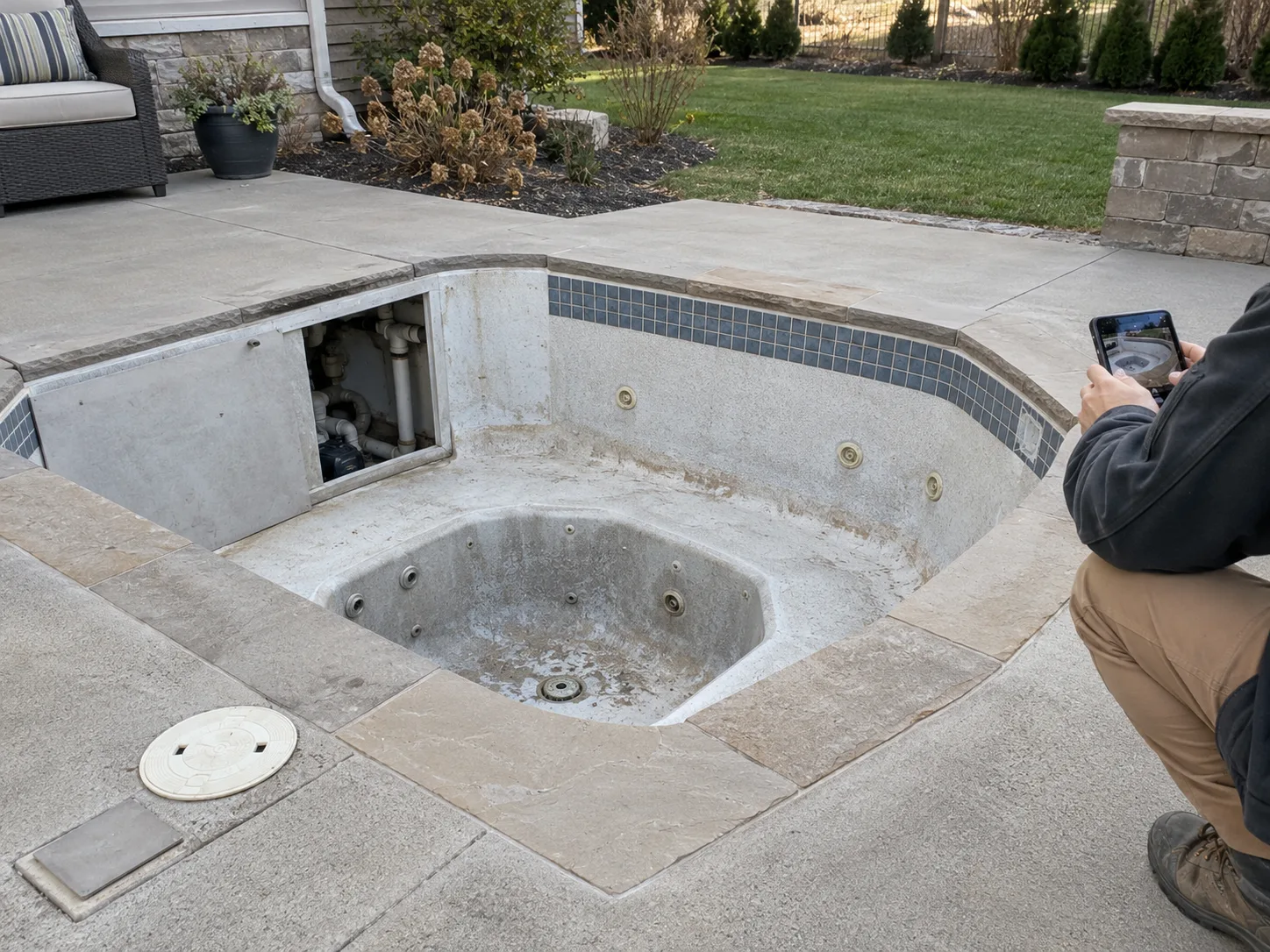
Some recessed spas are self-contained shells set into a surround. Others are tied closely to concrete, tile, plumbing, or shared pool equipment. The visible basin does not tell the full story, so service-access and equipment photos are essential.
The desired end state sets the boundary
Removing a shell is different from filling an opening, rebuilding a patio, or restoring a deck. State what you expect to remain when the hauling is finished. That lets the removal scope stop at a clear, written boundary.
Utilities need a named owner
Electrical, gas, water, and shared equipment can require licensed or specialist work. Confirm who will disconnect or isolate each system and when. Removal should not begin on the assumption that an unused spa is automatically safe.
Material and access drive the plan
Concrete thickness, masonry, tile, shell material, depth, and machine access all affect feasibility. Wide photos of the installation and route provide context that a list of dimensions cannot.
Details to record
| Item | Your note |
|---|---|
| Shell material | |
| Installation depth | |
| Surrounding concrete or masonry | |
| Equipment shared with a pool | |
| Utility disconnection owner | |
| Required finished condition |
Use the notes to define the job
Send the completed details with wide and close photos. Ask the provider to state what is included, what must happen before arrival, and what condition the area will be left in. If a utility, structure, or access question remains open, resolve it before choosing a removal date.